To verify a Chinese supplier, you confirm four things: that the company legally exists (business licence and government registry), that it actually manufactures what it claims (business scope and factory evidence), that other buyers vouch for it (references and track record), and that the account you are paying belongs to the company (bank verification). The checklist below turns those four questions into ten concrete checks you can run before sending a deposit — most of them free, none requiring a trip to China.
Why does verification matter so much?
Because almost every serious sourcing loss traces back to a skipped verification step. The classic failures: the “factory” is a trading company marking up someone else’s production; the entity on the invoice is not the entity you researched; the bank account belongs to an individual who disappears with the deposit; or the company exists but is drowning in lawsuits from other buyers. Every one of those is discoverable in advance, usually within an hour.
The 10-point verification checklist
| # | Check | What it proves | How to do it |
|---|---|---|---|
| 1 | Business licence (营业执照) | The company legally exists | Ask for a copy — every legitimate Chinese company holds one and shares it without hesitation |
| 2 | Unified Social Credit Code | The licence is genuine and current | Cross-check the 18-character code on the government registry (gsxt.gov.cn) using the company’s Chinese name |
| 3 | Business scope | Manufacturer, not just a reseller | The registered scope must include production/manufacturing of your product category — not only “trading” |
| 4 | Registered address | A factory exists at the address | Check the address against satellite/street imagery — an office tower is not a production line |
| 5 | Litigation record | No pattern of disputes or debt | Search Chinese court records for judgments and “dishonest debtor” listings against the company |
| 6 | Certifications | Products can legally enter your market | Request test reports and certificates (CE, RoHS, FDA, etc. as applicable) and verify the certificate numbers with the issuing body |
| 7 | Live video tour | The production line is real and current | Ask for a live walkthrough of the factory floor — recorded videos can be borrowed; live ones cannot |
| 8 | Buyer references | A track record with buyers like you | Ask for two or three international references and actually contact them |
| 9 | Bank account match | Your money goes to the company | The beneficiary name must exactly match the verified company name — never a personal account |
| 10 | Trial order | Real-world performance | Start smaller than you would like; the first order is part of verification, not just business |
How do you tell a manufacturer from a trading company?
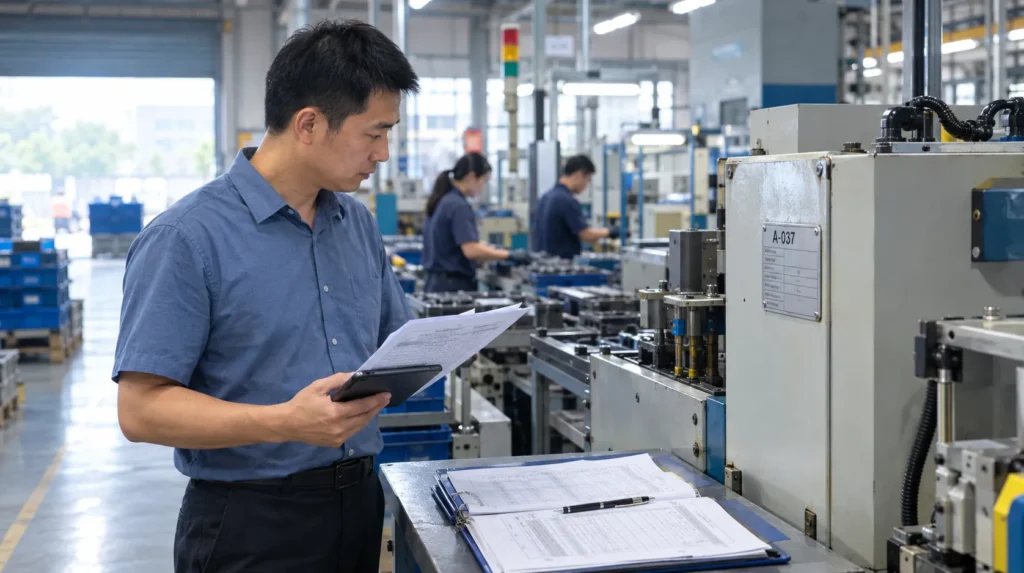
Factories tend to focus on one product family, show machinery and production workers in their materials, quote longer lead times, and know their own processes in deep technical detail when questioned. Trading companies tend to offer a wide catalogue across unrelated categories, respond faster, quote shorter lead times, and go vague when you ask process-level questions. The licence check (point 3 above) settles it formally, and the live video tour settles it practically.
A trading company is not always the wrong choice — for small orders across several categories, consolidation has genuine value. The problem is only ever the disguise: paying factory-direct expectations to a middleman’s price structure, or trusting quality control to a company that never touches the goods.
What are the red flags that should end a conversation?
- Reluctance or excuses when you ask for the business licence.
- Any request to pay a personal bank account — or a mid-transaction “our bank details changed” message.
- Pressure to pay quickly, especially framed as “the price expires today”.
- A price dramatically below every other quote — someone is planning to recover that margin somehow.
- Vague or contradictory answers to basic questions about their own factory and process.
- Refusal to accept staged payments or third-party inspection.
How does verification work on MadeInEast.com?
MadeInEast.com lists verified Chinese manufacturers rather than an open directory — the entity and manufacturing checks happen before a supplier appears on the platform. The remaining risk is handled structurally: Trade Assurance protects the payment and order terms, and the Inspection Solution puts independent eyes on the goods before they ship. Verification reduces the risk; protection and inspection deal with what remains.
Frequently asked questions
How long does supplier verification take?
The document checks (licence, registry, scope, litigation) take an hour or two once you have the company’s Chinese name. References and a live video tour add a few days of scheduling. Budget a week end-to-end — a fraction of the time a bad supplier will cost you.
Do marketplace “verified supplier” badges replace my own checks?
Treat badges as a filter, not a conclusion. A badge tells you some process was passed at some point; it does not tell you the entity on your invoice is the entity that was checked, or that the bank account you are wiring to belongs to it. Points 2 and 9 on the checklist are always yours to do.
What if the supplier refuses a video tour?
One polite refusal with a rescheduling offer is normal business. A pattern of deflection is an answer in itself — a real factory shows its production line to serious buyers, because that is exactly how factories win orders.
Should I verify a supplier I found on a marketplace?
Yes. On open marketplaces, always. On curated platforms the entity work is done for you, but payment hygiene (staged payments, corporate account, order protection) still applies to every transaction, everywhere.
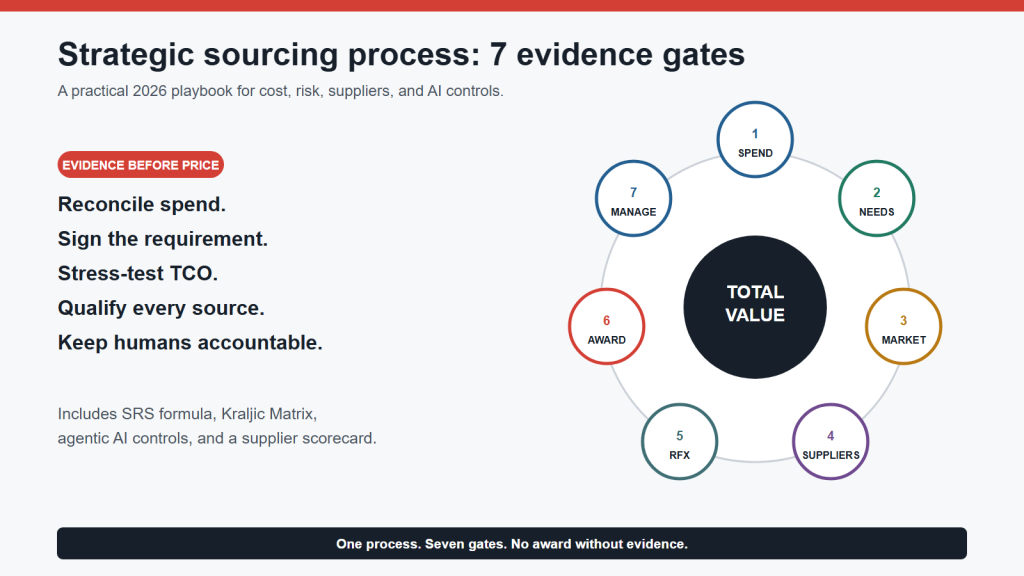
This checklist is step 4 of the full process — see the complete guide: How to Source Products from China. Next step after verification: pre-shipment inspection.