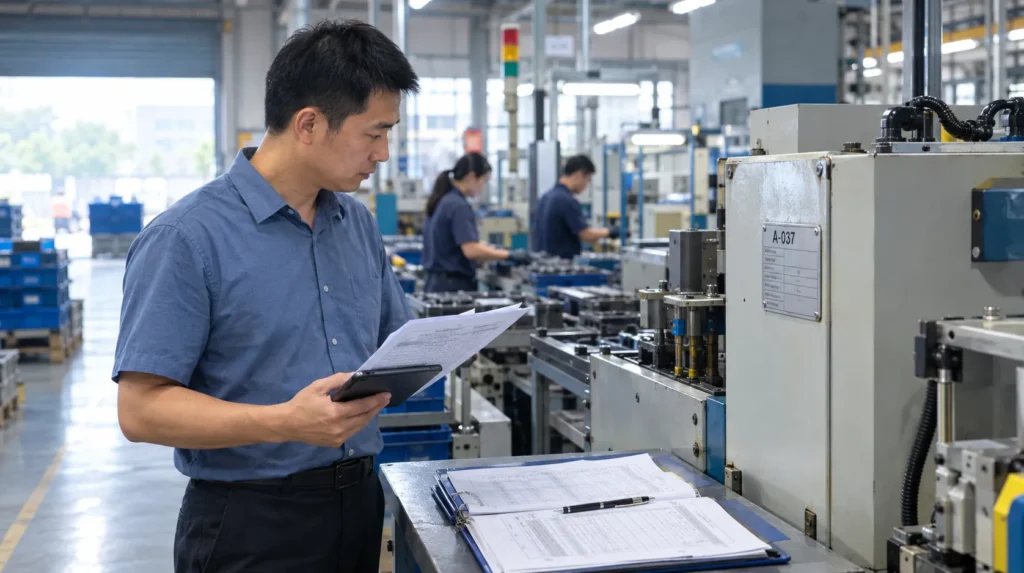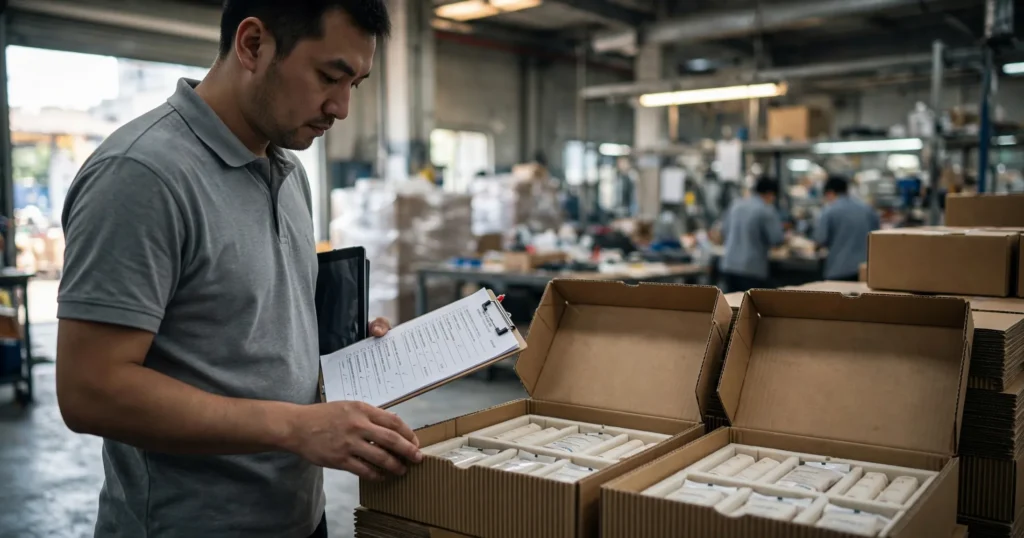
A pre-shipment inspection (PSI) is a check of your finished goods at the factory, carried out when production is 80–100% complete and before you release the balance payment. An inspector examines a statistical sample of units against your specification and approved sample, then issues a pass/fail report — giving you the last chance to catch defects while they are still the factory’s problem, not yours. Here is when to book one, what it covers, and what to do with the result.
Why inspect before shipment rather than on arrival?
Leverage. Before shipment, the goods are at the factory, the balance payment is unpaid, and rework costs the supplier a few days. After arrival, the goods are on your dock, the money is gone, and every remedy is slow, partial and adversarial. The inspection fee — typically a few hundred dollars — is the cheapest insurance in international trade relative to what it protects.
When should you book the inspection?
- At order time: write the inspection into the agreement — including that the balance payment follows a passed inspection, and that a failed one triggers rework and re-inspection at the factory’s cost.
- At ~80% production: schedule the inspection date with the factory and the inspection provider.
- Inspection day: usually one working day on site for a typical order.
- 24–48 hours later: report delivered with photos and a pass/fail/hold result.
- Then, and only then: release the balance payment and approve shipment.
What does a pre-shipment inspection check?
| Area | What the inspector verifies |
|---|---|
| Quantity | Finished and packed quantities match the purchase order and packing list |
| Specification | Materials, dimensions, colours and construction match your spec sheet and golden sample |
| Workmanship | Visual quality of a random sample — stitching, finishing, surface defects, assembly — classified as critical, major or minor defects |
| Function & basic safety | Products do what they are supposed to do; electrical/mechanical function tests where applicable (full lab safety testing is separate) |
| Labels & barcodes | Artwork, spelling, placement, legal markings, and that barcodes scan correctly to the right data |
| Packaging | Export cartons, inner packing, assortment, and a carton drop test for transit resilience |
| Documentation | Invoice, packing list and required test certificates are present and consistent with the physical shipment |
What is AQL and what level should you set?
AQL (Acceptable Quality Limit) is the international sampling standard (ISO 2859) that decides how many units are inspected and how many defects of each severity are tolerable before the lot fails. A common consumer-goods setting is AQL 0 for critical defects (anything unsafe or illegal — none accepted), 2.5 for major defects (a customer would return the product) and 4.0 for minor ones (cosmetic issues a customer would likely accept). Set your AQL levels in the purchase agreement, not on inspection day — the factory has a right to know the standard it is being held to.
What happens if the inspection fails?
Hold the shipment and hold the balance payment — that is the whole point of the sequencing. Instruct the factory to 100% sort or rework the defective portion, then re-inspect (at the factory’s cost, if your agreement says so, and it should). Do not accept “we’ll discount it” for defects that matter to your customers, and do not let shipping deadlines pressure you into releasing a failed lot: a late good shipment is recoverable; a distributed bad one rarely is.
How does inspection work on MadeInEast.com?
The platform’s Inspection Solution combines two layers: production monitoring at the factory while your order is being made, and independent third-party inspection by SGS before shipment, with the reports delivered to your buyer dashboard. Because it sits alongside Trade Assurance, a failed inspection connects directly to the order’s protection terms — the finding and the remedy live in the same place.
Frequently asked questions
How much does a pre-shipment inspection cost?
For most products and factory locations, a standard one-day PSI runs a few hundred US dollars. Weigh that against the value of the order and the cost of receiving a container of unsellable goods — it is rarely a close decision.
Can I rely on the factory’s own quality control?
Factory QC is real and useful, but it answers to the factory’s incentives, not yours. Independent inspection exists because the party paying for the goods and the party paid for them measure “good enough” differently.
Is one final inspection enough?
For simple products and proven suppliers, usually yes. For complex products, large orders or first-time suppliers, add a during-production check at 20–30% completion — specification drift caught early is a correction; caught at the end, it is a dispute.
Does an inspection guarantee compliance in my market?
No — a PSI verifies conformity to your specification and visible quality. Regulatory compliance (safety standards, chemical limits) is proven by laboratory testing and certificates, which the inspector checks for presence and consistency but does not perform on site.
Inspection is step 8 of the full process — see the complete guide: How to Source Products from China. It works best when you verified the supplier first: the 10-point verification checklist.